When we designed the first generation of proton therapy centers, no one asked about equipment replacement. The focus was entirely on getting the building right for the technology that existed at the time. We meticulously followed vendor specifications, ensured every dimension matched requirements, and poured concrete walls 14 feet thick to contain radiation.
The buildings worked brilliantly. They’ve treated hundreds of thousands of patients over two decades. But now those facilities are facing a challenge we didn’t anticipate: the technology has evolved dramatically, and the buildings weren’t designed to accommodate change.
Our work on upgrade projects is pushing us to think differently about new construction. Every lesson learned from trying to replace equipment in facilities that never planned for it now informs how we design freestanding buildings. The question has shifted from “Does this building meet today’s vendor requirements?” to “Will this building allow for technology advances we can’t even predict yet?”
What Upgrade Projects Are Teaching Us
At Massachusetts General Hospital, we’re managing the world’s first major proton therapy center upgrade. The Francis H. Burr Proton Therapy Center opened in 2001, and 24 years later, it needs new equipment. The challenge isn’t the equipment itself—it’s the building around it.
A tower was constructed above the proton center after the original facility opened. No one anticipated needing to extract massive pieces of equipment decades later. Now we’re working around structural constraints that make equipment removal extraordinarily complex.
The new equipment comes from the same vendor as the original system. The footprint is similar. In theory, this should be a straightforward swap. In reality, we’ve had to blow out (those 14’-thick) concrete walls to get the old equipment out. The process is taking longer and costing more than anyone expected.
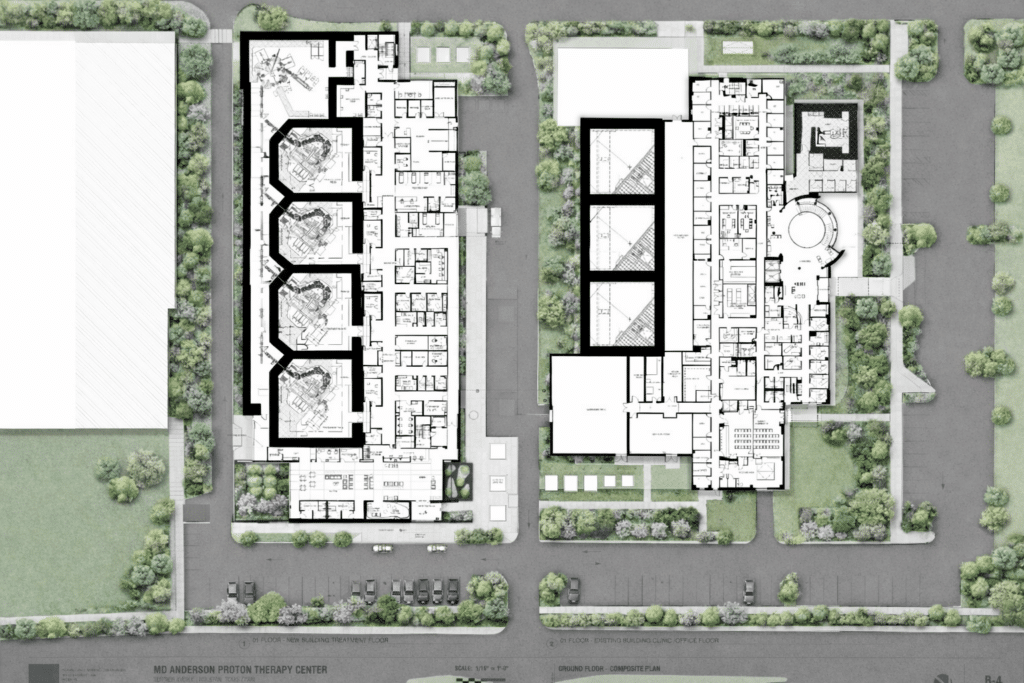
In Houston, MD Anderson is upgrading their first proton therapy center with an even more complex scenario. They’re replacing equipment with a system from another vendor. The new equipment has a different footprint, different dimensions, and different spatial requirements than the original.
We have to blow out the back wall to install the new equipment. The reconstruction required through heavily shielded walls can create significant changes to the building. What was designed as a permanent structure now needs major surgery to accommodate technology that didn’t exist when the facility was built.
Both projects have taught us the same fundamental lesson: buildings should not stand in the way of upgrades.
The Original Focus Was Too Narrow
Twenty years ago, our entire design focus was on adhering to vendor requirements and specifications. Equipment manufacturers provided detailed interface documents outlining exactly what the building needed to provide. We followed those specifications precisely.
That approach made sense at the time. Proton therapy was new. The equipment was extraordinarily complex and expensive. Our job was to create buildings that met every technical requirement so the systems could operate safely and effectively.
But we were designing for a moment in time, not for a lifespan.
The construction costs for particle therapy centers are substantial—$250+ million for new facilities. These aren’t buildings you can easily replace when technology evolves. They need to serve institutions for decades, through multiple generations of equipment.
Now, we’re bringing future flexibility much more top of mind. We still have to meet vendor requirements—the physics demands of particle accelerators don’t change. But we’re asking a new question alongside the technical specifications: What decisions can we make now that will allow this building to adapt later?
What Flexibility Means in Particle Therapy Centers
Flexibility in a particle therapy center means anything we do during design and construction that allows for change decades later.
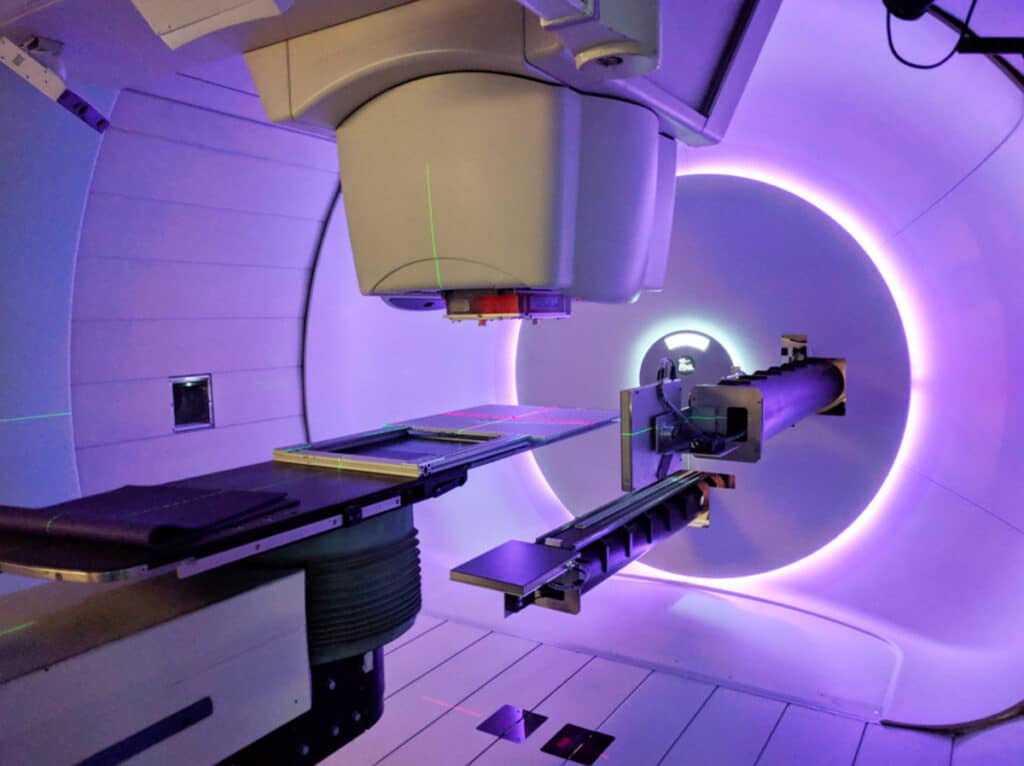
Extra space is the simplest form of flexibility. Building treatment vaults slightly larger than the minimum vendor requirements creates room for equipment with different dimensions. Adding height to ceilings accommodates taller systems. Widening corridors allows for moving larger components during future installations.
Modular construction is another approach our team is actively studying. If certain structural elements can be prefabricated and designed for removal, future equipment changes become less destructive. A removable wall section costs more than a permanent wall, but far less than demolishing concrete to extract equipment 25 years later.
Access pathways designed from the beginning change everything. At UCSF, we’re positioning proton vaults to allow equipment access for both initial installation and potential future extraction, even though a tower will sit above the facility. We’re creating pathways, preserving access points, and ensuring structural elements don’t block future equipment movement.
Structural coordination with elements above or adjacent to particle therapy centers matters enormously. If you’re building a tower above your center, the tower’s foundations need to preserve extraction routes. If you’re integrating with existing facilities, the connections need to allow for future reconfiguration.
The challenge is that most people don’t even know to ask these questions yet. Institutions planning their first particle therapy center naturally focus on getting the facility built and operational. Future flexibility isn’t intuitive when you’re wrestling with immediate challenges like site selection, budget constraints, and vendor coordination.
That’s where experience with upgrade projects becomes invaluable. We’ve seen what happens when buildings don’t plan for change. We know which decisions during initial design save millions during future equipment replacement.
Marrying Vendor Requirements and Flexibility
The tension in particle therapy design is that you have to satisfy both present requirements and future possibilities simultaneously.
Vendor specifications aren’t negotiable. The equipment demands specific dimensions, shielding thickness, structural support, and mechanical systems. Physics requirements for containing particle beams traveling at two-thirds the speed of light don’t allow for approximations.
But within those constraints, there’s room for flexibility. You can build vaults slightly larger than the minimum requirements without compromising radiation safety. You can design removable wall sections that meet structural and shielding standards while allowing future access. You can position equipment to preserve extraction pathways without violating operational requirements.
The key is understanding which elements are fixed by physics and which have flexibility built into vendor specifications. That distinction requires deep experience with both the equipment and the architecture surrounding it.
Technology Is Advancing Daily
Particle therapy technology isn’t static. Proton therapy has evolved dramatically over 25 years. Treatment delivery has become faster and more precise. Imaging integration has improved. Equipment footprints have changed as manufacturers develop more compact systems.
Beyond proton therapy, other forms of particle therapy are emerging. Carbon ion therapy uses heavier particles that require different equipment and different building configurations. Facilities designed exclusively for proton therapy may want to add carbon therapy capabilities decades from now.
The lessons we’ve learned from two decades of proton therapy design now need to account for particle therapy more broadly. Buildings should accommodate not only equipment upgrades within the same treatment modality, but also potential expansion into different particle therapy technologies entirely.
This doesn’t mean building for every theoretical possibility. It means designing with enough flexibility that major technology shifts don’t require demolishing and rebuilding entire facilities.
How Upgrade Projects Inform New Builds
Every challenge we solve in Massachusetts General Hospital and Houston becomes knowledge we apply to new construction projects.
When we discover that equipment extraction requires blowing out walls, we design new buildings with removable wall sections in strategic locations. When we learn that tower foundations above treatment vaults complicate equipment access, we coordinate structural systems differently in new projects. When we realize that vendor changes mean dramatic footprint differences, we build extra space into new vault designs.
The upgrade projects are teaching us to ask different questions during initial design:
- If this equipment needs replacement in 20 years, how will we get it out?
- If the institution switches vendors, how much building modification will that require?
- If particle therapy technology evolves beyond proton therapy, can this building accommodate different treatment modalities?
- What structural elements need to be permanent, and which can be designed for removal?
These questions don’t dramatically increase initial construction costs. A slightly larger vault or a removable wall section adds incrementally to the budget. But they can save millions during future upgrades by reducing the reconstruction required through heavily shielded structures.
The New Standard for Particle Therapy Design
Upgrade projects are redefining our thinking about new builds. The standard is no longer “Does this building meet current vendor requirements?” The standard is “Does this building meet vendor requirements while preserving flexibility for equipment we can’t predict yet?”
This shift in thinking affects every aspect of particle therapy center design:
Site selection now considers long-term equipment access, not only initial installation logistics. Sites that seem perfect for today’s equipment might be problematic for future replacement.
Structural design incorporates removable elements and preserved pathways alongside the permanent concrete and steel required for radiation containment.
Mechanical systems include excess capacity for equipment with higher cooling demands or different utility requirements than current systems.
Spatial planning builds in extra volume where physics allows it, creating room for equipment evolution without requiring major reconstruction.
The goal is to create buildings that work brilliantly for today’s technology while not becoming obsolete when that technology advances.
What This Means for Your Project
If you’re planning a particle therapy center, the lessons from upgrade projects should inform your design from day one.
Work with architects who have experience both designing new facilities and managing equipment replacement in existing ones. The knowledge from upgrades translates directly to better new construction.
Ask about flexibility during initial planning. How much extra space makes sense for your vaults? Where should removable wall sections be positioned? What access pathways need preservation? Which structural elements should allow for future modification?
Understand that flexibility isn’t about building for every theoretical scenario. It’s about making strategic decisions during design that reduce the cost and complexity of inevitable technology evolution.
The institutions we’re helping upgrade now wish their original buildings had been designed with more flexibility. They’re investing millions in reconstruction that could have been avoided with different initial design decisions. Don’t let your facility face the same challenges 20 years from now.
Looking Ahead
Particle therapy technology will continue advancing. Equipment will become more capable, more precise, and potentially more diverse as different particle therapy modalities emerge. Buildings designed today need to serve institutions through decades of that evolution.
At Jessen Proton, upgrade projects have fundamentally changed how we approach new construction. We still deliver buildings that meet every vendor specification and operate flawlessly from day one. But now we’re also designing for day 7,500—the day 20 years from now when equipment needs replacement and the building either enables that change or fights against it.
The best time to plan for future flexibility is during initial design. The lessons from upgrade projects are teaching us exactly how to do that.
Questions about designing your particle therapy center with future flexibility? Contact us to discuss how upgrade project experience can inform your new facility’s future.