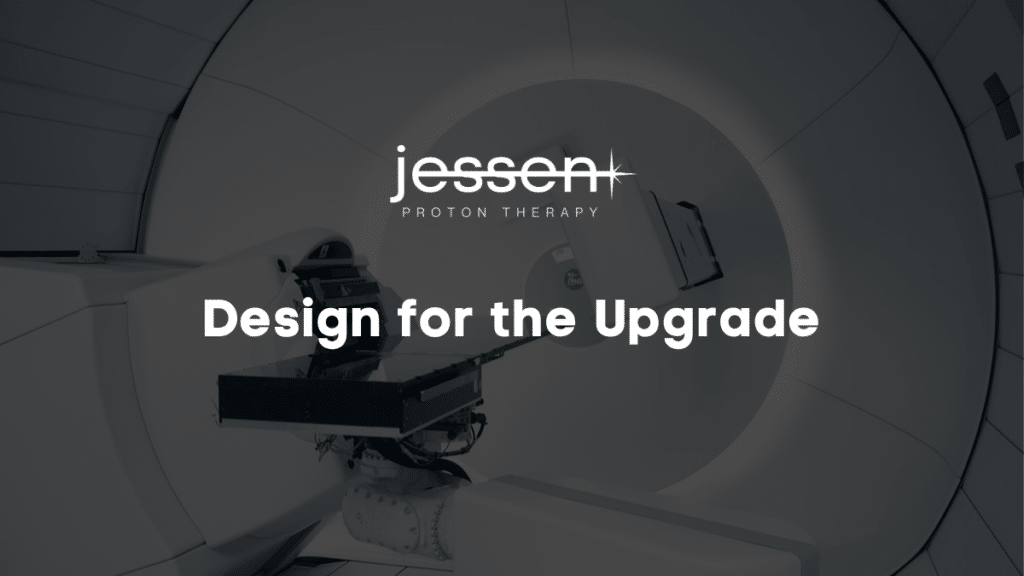
Right now, a small handful of upgrade projects are happening around the world where we’re taking particle therapy centers built 20-30 years ago and replacing their equipment with new systems. We’re learning valuable lessons from these projects—not just about upgrades, but about how to design new buildings better.
Two projects in particular are driving our thinking. At Massachusetts General Hospital, we’re replacing equipment from the same vendor. The footprint is similar, but a tower was built above the center after the original facility opened, making extraction far more complex than anyone anticipated. In Houston, MD Anderson is switching to a different vendor entirely. The new equipment has a different footprint, so we’re blowing out the back wall—a massive undertaking through 10- to 12-foot-thick concrete.
Both projects share the same lesson: buildings should not stand in the way of upgrades.
Decommissioning: The New Challenge
Decommissioning means extracting equipment and disposing of it safely. It sounds straightforward, but it’s certainly not easy. We’re removing radioactive materials and activated equipment from buildings that are often still operating.
At MGH, the hospital continues functioning. At MD Anderson, the proton therapy center next door keeps treating patients. You can’t shut everything down. You have to carefully plan pathways for removing radioactive materials while people are working in adjacent spaces.
This requires detailed planning. Gantt charts showing the sequence of equipment removal. Understanding that disconnecting certain components might trigger radiation activity. Coordinating with radiation safety experts and physicists who understand the sequential effects of disassembling activated systems.
At MGH, we spent three months just planning the decommissioning before removing anything. That planning revealed that equipment needed time to cool off before safe transport. It showed us which disconnection sequences would or wouldn’t create radiation concerns.
These weren’t considerations during initial design. But every lesson we’re learning in decommissioning is now informing how we design new centers. We’re thinking about extraction pathways from day one. We’re preserving access routes. We’re building with future removal in mind.
Modular Shielding and Prefabricated Elements
One approach we’re actively studying is modular construction using prefabricated shielding elements. At PSI in Switzerland, they use movable shielding blocks with overhead cranes built into the structure. The idea is elegant: install permanent structures and shielding for long-term operation, but design it so pieces can be repositioned when technology changes.
Imagine your facility operates perfectly for 20 years. Then your client wants to upgrade to different equipment with a different configuration. Instead of demolishing 12-foot-thick concrete walls, you bring in an overhead crane, move some shielding blocks a few feet, reconfigure the treatment area, and install new technology.
It works at research facilities. We’re now exploring whether it makes sense for clinical centers—and we’re implementing this approach on a project on the West Coast right now. The goal is to design permanent structures that function perfectly today while building in the ability to reconfigure tomorrow.
This approach is about strategic flexibility where it matters most. You identify which structural elements might need to move, design them for modular installation, and preserve the overhead infrastructure to move them. Everything else stays permanent.
The key is doing this during initial design. Retrofitting overhead cranes and movable shielding into an existing facility costs exponentially more than building them in from the start.
The Cost Breakdown
Here’s where the financial argument for flexibility becomes clear.
Adding flexibility during initial design costs money. Extra vault space. Removable wall sections. Overhead infrastructure for future reconfiguration. Preserved access pathways. These additions add incrementally to your construction budget—maybe $500,000 to $2 million depending on scope and complexity.
Now compare that to what happens without it. Blowing out back walls to accommodate a vendor change through 12-foot-thick concrete requires major reconstruction. Tens of millions in additional costs. Extended timelines. Engineering challenges of working in an active facility surrounded by occupied spaces.
The institutions managing upgrades now are making the financial case clear. When you’re planning a $250+ million facility, spending an additional 1-2% on flexibility that could save 10-20% during future upgrades is rational economics.
What This Changes for New Projects
Upgrade projects are teaching us to ask different questions during initial design.
If this equipment needs replacement in 20 years, how do we get it out? If the institution switches vendors, how much building modification will that require? What structural elements need to be permanent, and which can be designed for removal?
These aren’t hypothetical questions anymore. We’ve seen what happens when buildings can’t answer them. And we’re building that experience into every new facility we design.
At Jessen Proton, upgrade projects have fundamentally changed how we approach new construction. We still deliver buildings that meet every vendor specification and operate flawlessly from day one. But now we’re also designing for day 7,500—the day 20 years from now when equipment needs replacement and the building either enables that change or fights against it.
Questions about designing your particle therapy center with future upgrades in mind? Contact us to discuss how our upgrade project experience can inform your facility’s design.